PHÒNG GIÁO DỤC VÀ ĐÀO TẠO …
TRƯỜNG THCS …
Đề chính thức
ĐỀ KIỂM TRA HỌC KỲ I
Môn: Tiếng Anh – Lớp 9
Thời gian làm bài: 60 phút (không kể thời gian giao đề)
Mã đề: 905
Listen to the conversation between Mai and Mark talking about their trip to a traditional craft village. Mark the letter A, B, C, or D on your answer sheet to indicate the correct answer to each of the following questions. You will hear the recording twice.
Question 1. What traditional craft village did Mai and Mark visit last weekend?
A. Bat Trang Pottery Village
B. Chuong Conical Hat Village
C. Van Phuc Silk Village
D. Dong Ho Painting Village
Question 2. The local artisans have preserved their craft by ______.
A. passing down skills through generations
B. opening large modern factories
C. selling their products only to tourists
D. inviting foreign artists to teach them
Question 3. What activity did Mark enjoy the most during their visit?
A. Collecting natural green palm leaves
B. Weaving silk scarves with the weavers
C. Painting decorative patterns on a hat
D. Cooking traditional local dishes
Question 4. Chuong village is an ideal destination for people who want to ______.
A. shop in crowded modern supermarkets
B. enjoy exciting amusement park rides
C. discover cultural heritage in a peaceful setting
D. study ancient architecture of tall skyscrapers
Listen to a talk by David about living in a bustling metropolitan city and mark the letter A, B, C, or D on your answer sheet to indicate the correct answer to each of the following questions. You will hear the recording twice.
Question 5. What is mentioned as the most frustrating issue for commuters in the city?
A. Expensive cinema tickets
B. Severe rush-hour traffic jams
C. Lack of international schools
D. Unpredictable stormy weather
Question 6. How does David usually travel to his workplace?
A. By private car
B. By underground metro
C. On foot
D. By motorbike
Question 7. How long does David’s daily journey to work take?
A. Around 20 minutes
B. Nearly 45 minutes
C. More than an hour
D. Exactly two hours
Question 8. According to David, why has air quality in the city centre declined?
A. Heavy emissions from private vehicles
B. The construction of too many public parks
C. A shortage of modern metro lines
D. People burning dry leaves in street corners
Mark the letter A, B, C, or D on your answer sheet to indicate the sentence that is best made from the given cues in each of the following questions.
Question 9. The/ busy/ city/ become/, / the/ high/ level/ noise pollution/ be.
A. The busier the city becomes, the higher the level of noise pollution is.
B. The busier the city becomes, higher the level of noise pollution is.
C. The more busy the city becomes, the higher the level of noise pollution is.
D. Busier the city becomes, the higher the level of noise pollution is.
Question 10. Unless/ teenagers/ get/ enough/ sleep/, / they/ suffer/ from/ lack/ concentration.
A. Unless teenagers gets enough sleep, they might suffer from a lack of concentration.
B. Unless teenagers get enough sleep, they cannot suffer from a lack of concentration.
C. Unless teenagers get enough sleep, they might suffer from a lack of concentration.
D. Unless teenagers don't get enough sleep, they will suffer from a lack of concentration.
Mark the letter A, B, C, or D on your answer sheet to indicate the correct answer to each of the following questions from 11 to 12.
Question 11. Put the sentences (a–c) in the correct order to make a logical paragraph.
The local youth union launched a campaign to encourage teenagers to adopt a healthier lifestyle. First, they organized morning jogging clubs in residential parks to help students build regular exercise habits. ______.
a. Finally, they held monthly workshops to teach teens practical stress management skills and time management techniques.
b. In addition, the organizers introduced weekly cooking classes to instruct students on how to prepare nutritious, balanced meals.
c. They believed that eating less fast food and cutting down on sugary drinks would significantly boost students' energy levels.
A. a – c – b
B. b – c – a
C. c – b – a
D. b – a – c
Question 12. Choose the sentence that can end the paragraph in Question 11 most appropriately.
A. Fast food restaurants are becoming more popular among secondary school students.
B. Through these meaningful initiatives, teenagers can improve both their physical and mental well-being.
C. The municipal government decided to construct two more sports centres downtown.
D. Parents should strictly forbid their children from playing video games after 9 p.m.
Four phrases/sentences have been removed from the text below. For each question, mark the letter A, B, C, or D on your answer sheet to indicate the correct option that best fits each of the numbered blanks from 13 to 16.
In Tan Chau town in An Giang Province, Vietnam, black silk has been produced for over a century. (13)______. The craftspeople make this unique silk entirely by hand, dyeing it with the natural juice of the mac nua fruit. This special dye gives the fabric an attractive glossy black surface and an extraordinarily smooth texture. Experienced artisans in the town have passed down their secret dyeing techniques to keep (14)______. In the past, My A silk was considered a luxury item worn only by wealthy families on special occasions. Today, designers and fashion lovers value this fabric because it is both eco-friendly and durable. (15)______. While modern synthetic fabrics can be produced quickly in large factories, My A silk is (16)______.
A. a living symbol of Vietnamese craftsmanship and cultural identity
B. the authentic formula for making traditional My A silk alive
C. Local people have been weaving and dyeing My A silk here for many decades
D. Both natural silk and mac nua fruit are essential elements of this famous craft
Question 13. ______ Question 14. ______ Question 15. ______ Question 16. ______
Read the following announcement and mark the letter A, B, C, or D on your answer sheet to indicate the correct option that best fits each of the numbered blanks from 17 to 19.
GREEN NEIGHBOURHOOD CLUB
Are you keen (17)______ protecting our local environment and keeping our streets clean?
Then come and join our Green Neighbourhood Club!
We meet every Sunday morning to collect recyclable rubbish, plant trees along public paths, and raise community awareness about saving energy. You will also have (18)______ chance to participate in workshops on reducing plastic waste. It's a wonderful opportunity to make new friends and gain useful life skills. It's (19)______ great fun! Don't hesitate! Register today at the community centre or visit our website for further details.
Question 17.
A. at
B. on
C. about
D. with
Question 18.
A. a
B. an
C. the
D. X
Question 19.
A. the
B. a
C. an
D. X
Mark the letter A, B, C, or D on your answer sheet to indicate the word whose underlined part differs from the other three in pronunciation in each of the following questions.
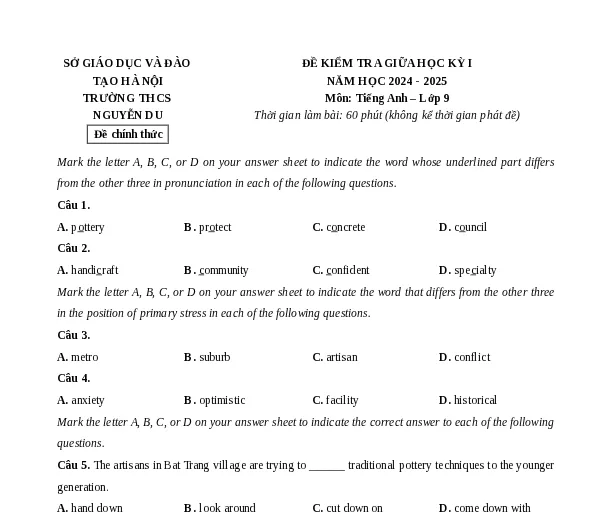
Question 20.
A. capital
B. facility
C. manage
D. traffic
Question 21.
A. promise
B. collaborate
C. concentrate
D. popular
Mark the letter A, B, C, or D on your answer sheet to indicate the correct answer to each of the following questions.
Question 22. Phong is carrying a heavy pile of books to the library, and his classmate Lan offers to help.
Lan: "Would you like me to carry some of those books for you?"
Phong: "______"
A. That's very kind of you. Thanks a lot!
B. You're welcome.
C. Never mind, I don't care.
D. Yes, you must carry them now.
Question 23. To reduce stress during the exam period, students ______ balance their revision time with regular relaxation.
A. shouldn't
B. ought to
C. mustn't
D. might not
Question 24. Developing effective study habits and daily routines is crucial for your personal ______.
A. frustration
B. well-being
C. distraction
D. congestion
Question 25. The local community centre is usually crowded ______ young people on weekends.
A. of
B. with
C. by
D. in
Question 26. Teens should learn how to ______ their priorities so that they do not feel overwhelmed by deadlines.
A. manage
B. management
C. managerial
D. manager
Read the following passage and mark the letter A, B, C, or D on your answer sheet to indicate the correct option that best fits each of the numbered blanks from 27 to 30.
Many secondary school students feel stressed because they do not know how to organize their daily schedule efficiently. Here are several practical strategies to help you manage your time (27)______ and achieve academic success. First, create a weekly study planner and prioritize your assignments based on their urgency and importance. Doing this helps you avoid procrastination and finish tasks on time. Second, eliminate potential distractions when doing homework. Keep your smartphone away or switch it to silent mode (28)______ text messages and social media alerts can disrupt your focus. Third, you should remember to take short, active breaks between study sessions. Taking a five-minute walk or doing simple stretching exercises helps you recharge your mind and maintain high (29)______. Finally, remember that getting adequate sleep each night is essential for your brain function. If you follow these simple habits, you will be able to cope (30)______ academic pressure more easily.
Question 27.
A. effectively
B. effect
C. effective
D. effectiveness
Question 28.
A. despite
B. because
C. although
D. because of
Question 29.
A. concentrate
B. concentrated
C. concentration
D. concentrative
Question 30.
A. at
B. with
C. on
D. about
Mark the letter A, B, C, or D on your answer sheet to indicate the sentence that is closest in meaning to the original sentence in each of the following questions.
Question 31. Lan does not know where she can seek advice on her study anxiety.
A. Lan does not know where to seek advice on her study anxiety.
B. Lan does not know where seeking advice on her study anxiety.
C. Lan knows where to seek advice on her study anxiety.
D. Lan does not know where she seeking advice on her study anxiety.
Question 32. Because of the sudden heavy downpour, the school outdoor sports day was cancelled.
A. The school outdoor sports day was carried out despite the heavy downpour.
B. The school called off the outdoor sports day because it rained heavily all of a sudden.
C. The sudden heavy downpour prevented the school from calling off the sports day.
D. The school turned down the outdoor sports day although the weather was fine.
Mark the letter A, B, C, or D on your answer sheet to indicate the word that differs from the other three in the position of primary stress in each of the following questions.
Question 33.
A. artisan
B. pottery
C. handicraft
D. metropolitan
Question 34.
A. suburban
B. polluted
C. liveable
D. priority
Read the following passage and mark the letter A, B, C, or D on your answer sheet to indicate the correct answer to each of the following questions from 35 to 38.
Urbanization has accelerated rapidly across the world over the past few decades, prompting millions of people to relocate from rural areas to major cities. While big cities offer undeniable advantages, they also present considerable challenges for their residents.
On the one hand, urban environments provide remarkable living conditions. Residents have convenient access to top-tier healthcare facilities, reputable universities, and varied recreational amenities such as shopping malls, theatres, and sports complexes. Furthermore, metropolitan areas generate abundant employment prospects across diverse sectors, including technology, finance, and international business. As a result, ambitious young people often find it much easier to advance their careers in a bustling metropolis than in a quiet countryside village.
On the other hand, the rapid expansion of cities has created numerous drawbacks. High population density frequently leads to severe traffic congestion, overcrowding on public buses, and scarce parking spaces. In addition, urban air and noise pollution from industrial zones and millions of vehicles can severely impact citizens' physical and mental health. Another critical obstacle is the exorbitant cost of living; rents and property prices in central districts are frequently beyond the financial reach of low-income families and fresh graduates.
In conclusion, although metropolitan life provides unmatched career prospects and modern conveniences, urban dwellers must learn to navigate significant environmental and financial pressures.
Question 35. What is the main topic of the passage?
A. The reasons why rural living is superior to urban living.
B. The benefits and drawbacks of living in a major city.
C. How modern governments can solve urban traffic congestion.
D. High accommodation costs in metropolitan central districts.
Question 36. The word "exorbitant" in paragraph 3 is CLOSEST in meaning to:
A. extremely high
B. very reasonable
C. quite stable
D. relatively small
Question 37. According to paragraph 2, why do many young individuals prefer settling in big cities?
A. To enjoy peaceful natural surroundings and clean air.
B. To avoid competitive working environments.
C. To access abundant career opportunities in various modern sectors.
D. To pay lower prices for basic daily groceries.
Question 38. Which of the following statements is NOT TRUE according to the passage?
A. Urban dwellers enjoy access to top-quality medical and educational services.
B. Air and noise pollution in metropolitan areas can harm people's health.
C. Living costs and housing in city centres are generally very affordable.
D. Traffic jams and crowded public transport are common issues in big cities.
Read the following signs/notices and mark the letter A, B, C, or D on your answer sheet to indicate the correct answer to each of the following questions.
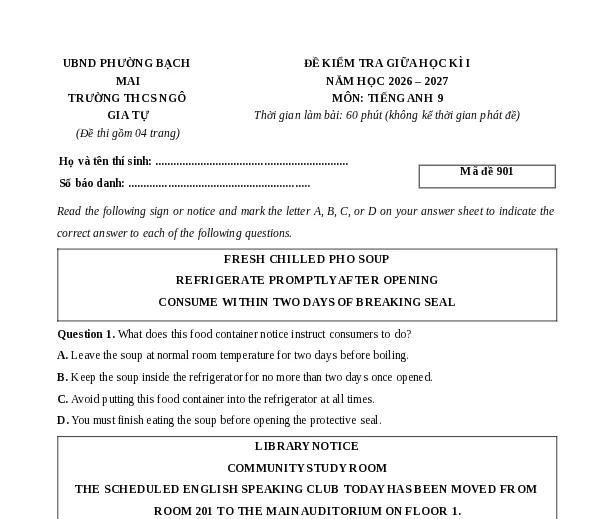
Question 39. What does the notice say?
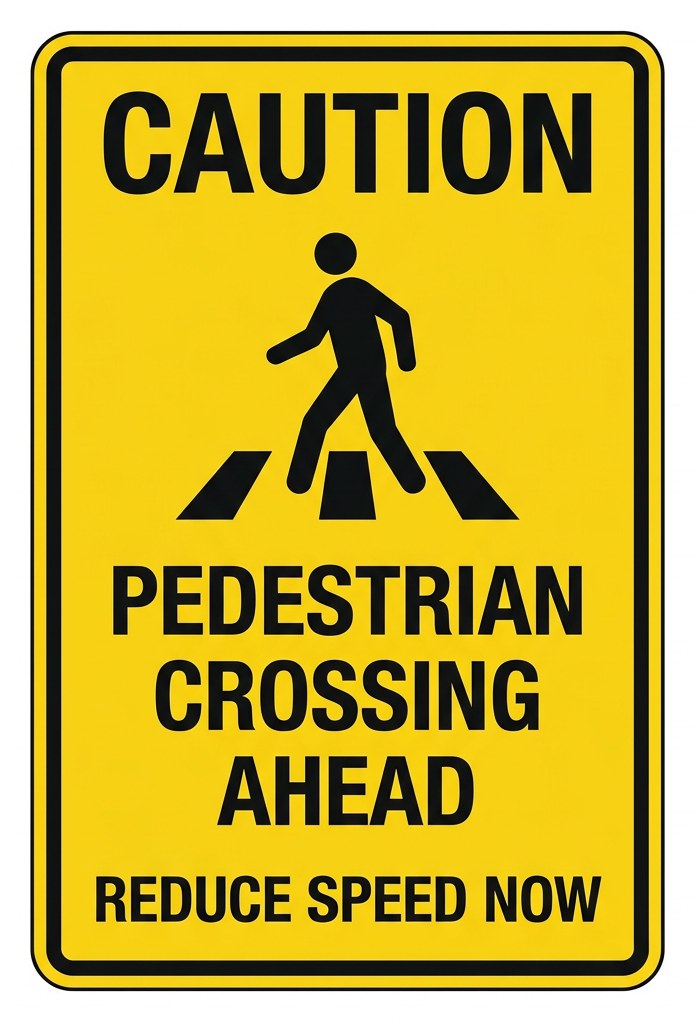
A. Pedestrians are forbidden to cross the road here.
B. Drivers must slow down because people may be crossing the street ahead.
C. Vehicles can drive fast because there is no pedestrian crossing nearby.
D. Pedestrians should run quickly across the road to avoid traffic.
Question 40. What does the notice say?
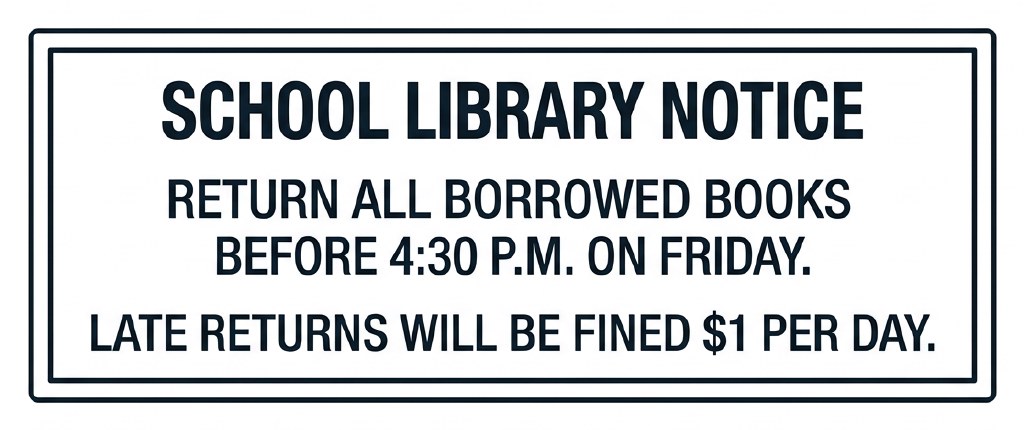
A. Students can return borrowed books at any time next week without paying fees.
B. The school library will be closed permanently on Friday afternoon.
C. You must return your borrowed books by 4:30 p.m. on Friday to avoid paying a fine.
D. Students will receive $1 every day if they return their books early.
--------- HẾT ---------
Họ và tên thí sinh: .............................................................. Số báo danh: ........................
HƯỚNG DẪN CHẤM VÀ LỜI GIẢI CHI TIẾT
ĐỀ KIỂM TRA HỌC KỲ I – MÔN TIẾNG ANH 9 (MÃ ĐỀ: 905)
A. AUDIO SCRIPTS (TRANSCRIPT BÀI NGHE)
PART 1 (Questions 1 – 4)
Mai: Hi, Mark! How was your weekend?
Mark: It was fantastic, Mai! My family visited Chuong village, a famous traditional craft village in Thanh Oai District, Hanoi. Have you ever been there?
Mai: Yes, I have! That village is renowned for making traditional conical hats, or "non la".
Mark: Exactly! I was amazed to see that the local artisans have passed down their hat-making skills through generations to preserve this unique cultural heritage.
Mai: Did you try making a conical hat yourself?
Mark: Yes! A friendly artisan showed me how to select palm leaves and frame the hat. What I enjoyed the most was painting lovely decorative patterns of flowers and landscapes on my own hat.
Mai: That sounds wonderful! Chuong village is indeed an ideal destination for anyone who wants to discover traditional cultural heritage in a peaceful countryside setting.
PART 2 (Questions 5 – 8)
David: Hello, everyone. My name is David, and I have lived in this metropolitan city for nearly five years. City life offers great job opportunities and wonderful entertainment, but it also comes with noticeable challenges. For most commuters like me, the most frustrating issue is the severe traffic jams during rush hours. Every morning, streets are packed with thousands of cars and motorbikes. Although I have a private car, I usually travel to work by the underground metro because it is much faster and avoids road congestion. Even so, my daily journey takes nearly 45 minutes from my suburban apartment to the downtown office. Another serious problem is the declining air quality in the city centre, which is primarily caused by heavy emissions from private vehicles. The local authorities are encouraging people to take public transport to make our city cleaner and more liveable.
B. BẢNG ĐÁP ÁN (40 CÂU TRẮC NGHIỆM – MỖI CÂU 0,25 ĐIỂM)
Câu | Đáp án | Câu | Đáp án | Câu | Đáp án | Câu | Đáp án |
|---|---|---|---|---|---|---|---|
1 | B | 11 | B | 21 | B | 31 | A |
2 | A | 12 | B | 22 | A | 32 | B |
3 | C | 13 | C | 23 | B | 33 | D |
4 | C | 14 | B | 24 | B | 34 | C |
5 | B | 15 | D | 25 | B | 35 | B |
6 | B | 16 | A | 26 | A | 36 | A |
7 | B | 17 | B | 27 | A | 37 | C |
8 | A | 18 | A | 28 | B | 38 | C |
9 | A | 19 | D | 29 | C | 39 | B |
10 | C | 20 | B | 30 | B | 40 | C |
C. GIẢI THÍCH CHI TIẾT
Question 1. Đáp án B.
- Thông tin nghe: "My family visited Chuong village... renowned for making traditional conical hats."
Question 2. Đáp án A.
- Thông tin nghe: "...passed down their hat-making skills through generations to preserve this unique cultural heritage." (pass down = truyền lại).
Question 3. Đáp án C.
- Thông tin nghe: "What I enjoyed the most was painting lovely decorative patterns... on my own hat."
Question 4. Đáp án C.
- Thông tin nghe: "...an ideal destination for anyone who wants to discover traditional cultural heritage in a peaceful countryside setting."
Question 5. Đáp án B.
- Thông tin nghe: "...the most frustrating issue is the severe traffic jams during rush hours."
Question 6. Đáp án B.
- Thông tin nghe: "...I usually travel to work by the underground metro because it is much faster..."
Question 7. Đáp án B.
- Thông tin nghe: "Even so, my daily journey takes nearly 45 minutes..."
Question 8. Đáp án A.
- Thông tin nghe: "...declining air quality in the city centre, which is primarily caused by heavy emissions from private vehicles."
Question 9. Đáp án A.
- Cấu trúc so sánh kép (The + comparative + S + V, the + comparative + S + V): "The busier the city becomes, the higher the level of noise pollution is."
Question 10. Đáp án C.
- Cấu trúc Unless = If ... not: Sau Unless dùng thì hiện tại đơn ở dạng khẳng định (teenagers get), vế sau chỉ khả năng có thể xảy ra (might suffer from a lack of concentration).
Question 11. Đáp án B.
- Trình tự phát triển ý của đoạn văn:
- Mở đầu: "First, they organized morning jogging clubs..."
- Ý nối tiếp (b): "In addition, the organizers introduced weekly cooking classes..."
- Giải thích cho ý b (c): "They believed that eating less fast food and cutting down on sugary drinks would significantly boost students' energy levels."
- Bước cuối cùng (a): "Finally, they held monthly workshops..."
- Trật tự đúng là: b – c – a.
Question 12. Đáp án B.
- Đoạn văn đang nói về các hoạt động rèn luyện lối sống lành mạnh cho học sinh, do đó câu kết luận phù hợp nhất tóm tắt ý nghĩa của chiến dịch: "Through these meaningful initiatives, teenagers can improve both their physical and mental well-being."
Question 13 – 16.
- 13. C: Đặt câu giới thiệu lịch sử dệt lụa: "Local people have been weaving and dyeing My A silk here for many decades."
- 14. B: Cụm từ "keep ... alive" (giữ cho sống mãi): "...passed down their secret dyeing techniques to keep the authentic formula for making traditional My A silk alive."
- 15. D: Nối tiếp ý nghĩa của hai nguyên liệu tơ tằm và quả mặc nưa: "Both natural silk and mac nua fruit are essential elements of this famous craft."
- 16. A: Vế đối lập với vải sợi nhân tạo công nghiệp: "...My A silk is a living symbol of Vietnamese craftsmanship and cultural identity."
Question 17. Đáp án B.
- Cụm từ cố định: keen on doing something (thích, đam mê làm gì).
Question 18. Đáp án A.
- Cụm từ: have a chance to do sth (có cơ hội làm gì).
Question 19. Đáp án D.
- Danh từ fun là danh từ không đếm được nên không dùng mạo từ (X great fun).
Question 20. Đáp án B.
- Phần gạch chân ở phương án B phát âm là /ə/ (facility /fəˈsɪləti/), các phương án còn lại phát âm là /æ/ (capital /ˈkæpɪtl/, manage /ˈmænɪdʒ/, traffic /ˈtræfɪk/).
Question 21. Đáp án B.
- Chữ cái "o" ở phương án B phát âm là /ə/ (collaborate /kəˈlæbəreɪt/), các phương án còn lại phát âm là /ɒ/ (promise /ˈprɒmɪs/, concentrate /ˈkɒnsntreɪt/, popular /ˈpɒpjələ/).
Question 22. Đáp án A.
- Đáp lại lời đề nghị giúp đỡ ("Would you like me to...?"): "That's very kind of you. Thanks a lot!" là câu lịch sự và chuẩn xác nhất.
Question 23. Đáp án B.
- Đưa ra lời khuyên nên làm gì: ought to + V-infinitive (nên cân bằng thời gian ôn tập với thư giãn).
Question 24. Đáp án B.
- Cụm từ: personal well-being (sức khỏe, sự khỏe mạnh thể chất và tinh thần của cá nhân).
Question 25. Đáp án B.
- Cụm tính từ đi với giới từ: crowded with (đông đúc, chen chúc người).
Question 26. Đáp án A.
- Sau cấu trúc "learn how to" cần một động từ nguyên mẫu: manage priorities (quản lý/sắp xếp thứ tự ưu tiên).
Question 27. Đáp án A.
- Cần một phó từ (adverb) bổ nghĩa cho động từ manage: manage your time effectively (quản lý thời gian một cách hiệu quả).
Question 28. Đáp án B.
- Sau chỗ trống là một mệnh đề chỉ nguyên nhân (S + V: "text messages and social media alerts can disrupt..."), ta dùng liên từ because.
Question 29. Đáp án C.
- Sau tính từ high cần một danh từ: concentration (sự tập trung).
Question 30. Đáp án B.
- Cụm động từ cố định: cope with something (đương đầu, đối phó với áp lực).
Question 31. Đáp án A.
- Rút gọn mệnh đề danh ngữ chứa từ để hỏi: "where she can seek" chuyển thành "where to seek".
Question 32. Đáp án B.
- Cụm từ cancel đồng nghĩa với phrasal verb call off (hủy bỏ).
Question 33. Đáp án D.
- metropolitan có trọng âm rơi vào âm tiết thứ 3 (/ˌmetrəˈpɒlɪtən/), các từ còn lại có trọng âm rơi vào âm tiết thứ nhất (artisan /ˈɑːtɪzæn/, pottery /ˈpɒtəri/, handicraft /ˈhændikrɑːft/).
Question 34. Đáp án C.
- liveable có trọng âm rơi vào âm tiết thứ nhất (/ˈlɪvəbl/), các từ còn lại có trọng âm rơi vào âm tiết thứ 2 (suburban /səˈbɜːbən/, polluted /pəˈluːtɪd/, priority /praɪˈɒrəti/).
Question 35. Đáp án B.
- Đoạn 1 nêu: "...cities offer undeniable advantages, they also present considerable challenges...", đoạn 2 nói về mặt tích cực (pros) và đoạn 3 nói về khó khăn (cons). Vì vậy chủ đề chính là ưu điểm và nhược điểm của cuộc sống thành phố lớn.
Question 36. Đáp án A.
- Từ exorbitant nghĩa là đắt đỏ, quá cao, đồng nghĩa với extremely high.
Question 37. Đáp án C.
- Căn cứ vào đoạn 2: "...metropolitan areas generate abundant employment prospects across diverse sectors... young people often find it much easier to advance their careers...".
Question 38. Đáp án C.
- Phương án C ghi chi phí sinh hoạt và nhà ở tại trung tâm rất vừa túi tiền ("very affordable") là sai với thông tin trong đoạn 3 ("rents and property prices in central districts are frequently beyond the financial reach of low-income families...").
Question 39. Đáp án B.
- Biển báo ghi: "CAUTION - PEDESTRIAN CROSSING AHEAD - REDUCE SPEED NOW" (Cẩn thận - Phía trước có vạch sang đường cho người đi bộ - Hãy giảm tốc độ ngay) -> Lái xe phải giảm tốc độ vì có thể có người sang đường phía trước.
Question 40. Đáp án C.
- Thông báo nêu rõ: "RETURN ALL BORROWED BOOKS BEFORE 4:30 P.M. ON FRIDAY. LATE RETURNS WILL BE FINED $1 PER DAY" -> Phải trả sách trước 4h30 chiều thứ Sáu để không bị phạt tiền.