TRƯỜNG THCS …
Đề kiểm tra
UNIT 1 SCIENCE TEST
School year: 2026 – 2027
Subject: Science – Stage 7
Time allowed: 45 minutes
PART I. MULTIPLE CHOICE (5.0 points)
Choose one correct answer for each question. Each question is worth 0.25 points.
Câu 1. What is the basic unit of a living organism?
A. A cell
B. A tissue
C. An organ
D. An organ system
Câu 2. Which structure controls what enters and leaves a cell?
A. The nucleus
B. The cell membrane
C. The cell wall
D. The vacuole
Câu 3. What is the main function of the nucleus?
A. To absorb sunlight
B. To support the cell wall
C. To control cell activities
D. To store cell sap
Câu 4. Where do many chemical reactions that keep a cell alive take place?
A. In the cell wall
B. In the cell sap
C. In the nucleus
D. In the cytoplasm
Câu 5. What helps a plant cell keep its shape?
A. The cell wall
B. The cell membrane
C. The cytoplasm
D. The nucleus
Câu 6. Which substance is found in plant cell walls?
A. Chlorophyll
B. Cellulose
C. Haemoglobin
D. Mucus
Câu 7. Which structure absorbs light energy for photosynthesis?
A. The nucleus
B. The mitochondrion
C. The chloroplast
D. The cell membrane
Câu 8. What is found inside the large vacuole of a plant cell?
A. Mucus
B. Chlorophyll
C. Haemoglobin
D. Cell sap
Câu 9. Which structure is found in both a typical plant cell and a typical animal cell?
A. Cell membrane
B. Cell wall
C. Chloroplast
D. Large permanent vacuole
Câu 10. What happens inside mitochondria?
A. Cellulose is made into a wall.
B. Energy is released from food.
C. Light energy is absorbed.
D. Cell sap is stored.
Câu 11. Why is a microscope used to observe most cells?
A. It changes the shape of cells.
B. It makes cells produce light.
C. It magnifies their appearance.
D. It increases the number of cells.
Câu 12. Which objective lens should be selected first when viewing a new slide?
A. The lens with the highest magnification
B. The lens with the longest barrel
C. The lens with medium magnification
D. The lens with the lowest magnification
Câu 13. Why is a cover slip lowered gently onto a specimen?
A. To reduce the chance of trapping air bubbles
B. To make the specimen produce chlorophyll
C. To increase the microscope’s magnification
D. To give the specimen a cell wall
Câu 14. Which substance in red blood cells carries oxygen?
A. Cellulose
B. Haemoglobin
C. Chlorophyll
D. Cell sap
Câu 15. Which feature helps a neurone carry signals over a long distance?
A. A large cell wall
B. Many chloroplasts
C. A long axon
D. A large sap vacuole
Câu 16. What do cilia in the airways help to move?
A. Blood through the heart
B. Water into root cells
C. Food through the stomach
D. Mucus containing trapped particles
Câu 17. How does the long extension of a root hair cell help the plant?
A. It increases the area available for absorbing water.
B. It carries electrical signals to the leaf.
C. It moves mucus away from the root.
D. It contains haemoglobin to carry oxygen.
Câu 18. Why do palisade cells contain many chloroplasts?
A. To carry oxygen around the plant
B. To absorb light for photosynthesis
C. To move mucus along the leaf
D. To control water entering the root
Câu 19. A group of similar cells working together to perform a function is called a:
A. organ system.
B. organism.
C. tissue.
D. organ.
Câu 20. Which scientist described small compartments in cork and called them cells?
A. Robert Brown
B. Rudolf Virchow
C. Matthias Schleiden
D. Robert Hooke
PART II. SHORT-ANSWER QUESTIONS (5.0 points)
Answer all questions briefly. Each question is worth 0.5 points.
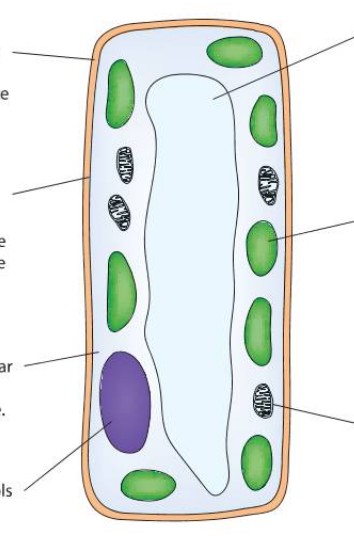
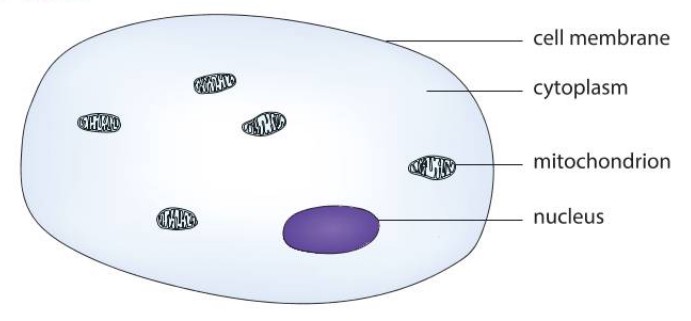
Câu 1 (0.5 points). Look at the plant cell and animal cell diagrams. Name all the parts of plant cell and animal cell in the picture.
Câu 2 (0.5 points). State one function of the cell membrane and one function of the cell wall.
______________________________________________________________________________________
Câu 3 (0.5 points). A student makes a model of a plant cell using a box and small objects. State one advantage and one limitation of the model.
______________________________________________________________________________________
Câu 4 (0.5 points). Why are onion bulb cells usually not green?
______________________________________________________________________________________
Câu 5 (0.5 points). Give two precautions when preparing and observing a microscope slide.
______________________________________________________________________________________
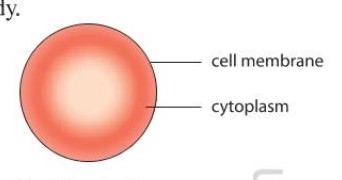
Câu 6 (0.5 points). Look at the diagram of a mature human red blood cell. Explain how the absence of a nucleus helps it carry oxygen.
______________________________________________________________________________________
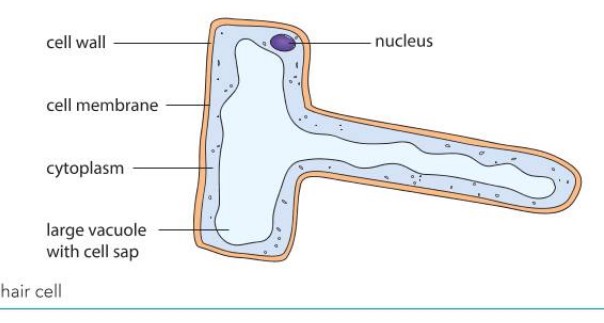
Câu 7 (0.5 points). Look at the diagram of a root hair cell. Describe one visible feature and explain how it helps the cell absorb water.
______________________________________________________________________________________
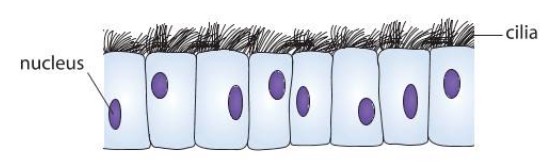
Câu 8 (0.5 points). The diagram shows cells with cilia lining part of the airways. Explain how the cilia help protect the lungs from dust trapped in mucus.
______________________________________________________________________________________
Câu 9 (0.5 points). Arrange these levels of organisation from smallest to largest: organ system, cell, organ, tissue.
______________________________________________________________________________________
Câu 10 (0.5 points). Give one example of a plant organ and one example of a human organ system.
______________________________________________________________________________________
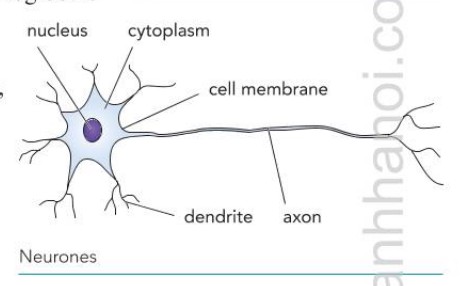
Câu 11 (0.5 points). Look at the diagram of a neurone. Identify the long part labelled “axon” and state its function.
______________________________________________________________________________________
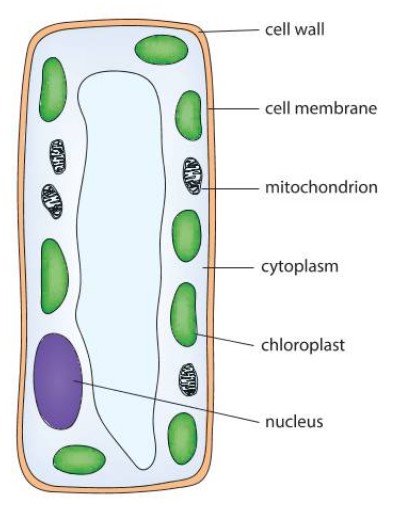
Câu 12 (0.5 points). Look at the palisade cell. Name the structures labelled “chloroplast” and explain how they help the cell make food.
______________________________________________________________________________________
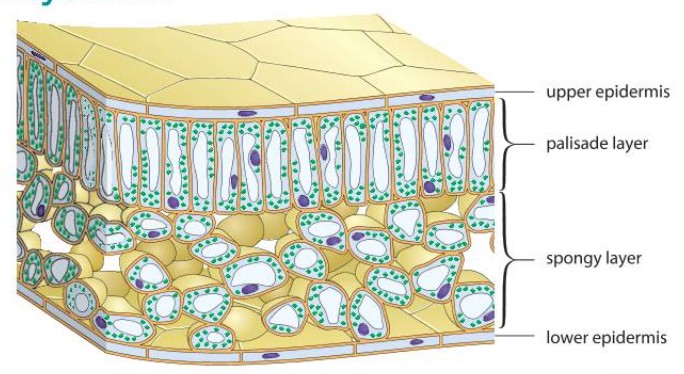
Câu 13 (0.5 points). Look at the section through a leaf. Name two different tissue layers shown in the diagram and describe one visible difference between their cells.
______________________________________________________________________________________
______________________________________________________________________________________
--------- HẾT ---------
Họ và tên thí sinh: ................................................ Số báo danh: ........................